
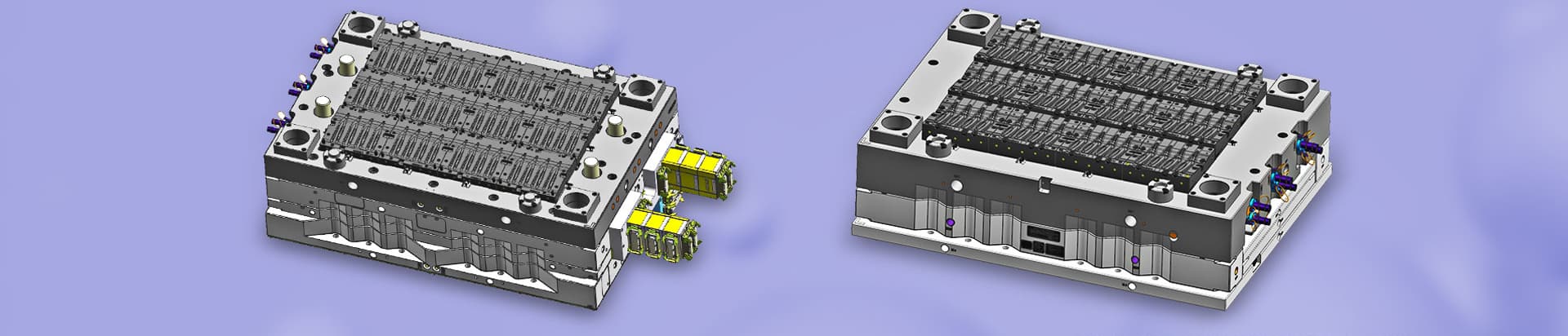
In the injection molding industry, when molten plastic cannot fully fill the mold cavity, resulting in incomplete or deformed plastic parts, this phenomenon is called "injection molding shortage". It is also commonly referred to as under injection, short shot, or insufficient glue in the industry. The root causes of this defect are often complex and can be summarized into four core dimensions: process parameters, mold structure, equipment status, and raw material characteristics.
This is the most common factor leading to material shortage. Once the temperature of the barrel or mold does not reach the standard, the flowability of the melt will significantly decrease, and it may even cool and solidify before filling the mold cavity. In response to this issue, operators should appropriately increase the heating temperature of the barrel and mold to ensure that the plastic melt always maintains a good flow state.
If the injection pressure is too low, the holding time is too short, or the pushing speed is too slow, the melt will lack sufficient power to complete the filling. In addition, if the entire injection molding cycle is set too tightly, the material may not have enough time to be fully heated and melted, which is particularly evident when the workshop voltage fluctuates greatly.
Rich practical experience has shown that if the mold cavity is switched to the pressure holding stage too early before it is completely filled, it can easily cause burrs near the gate, while other parts of the product are still in short supply; On the contrary, if the pressure switch is too late and the locking force is insufficient, the edges of the finished product will be wrapped by flying edges. In such situations, it is recommended to prioritize increasing the injection speed and accurately calibrate the pressure holding switching point.
If the venting system is not smooth and the air inside the injection mold cavity cannot be discharged smoothly, it will form air resistance, directly hindering the normal filling of the melt, and also easily inducing trapped gas, burning or obvious weld marks. When troubleshooting, it is necessary to check whether the existing exhaust duct is blocked and add exhaust positions if necessary. As an emergency response measure, a temporary exhaust groove can be set up on the parting surface, with a depth controlled between 0.02 and 0.04 millimeters and a width maintained at around 5 to 10 millimeters.
When the size of the gate system is limited and the gate opening is too small or the flow channel is too narrow, the flow resistance of the melt will increase dramatically. The solution is to moderately expand the gate cross-sectional area, thicken the runner, and adopt a curved transition design at the corners to reduce resistance.
For the the first mock examination with multiple cavities, if it is found that a particular cavity is always underfilled, the gate size of the cavity should be increased to achieve the balance of feeding amount of each cavity.
If there are extremely thin areas in the product structure, it is difficult for the melt to penetrate. This usually requires structural optimization from the product design end, or improving the filling effect by increasing the number of injection points.
The performance degradation of the injection molding machine itself is also an undeniable reason. For example, if the plasticizing ability of the machine cannot keep up with the production pace, or if the nozzle becomes clogged, it will directly lead to material interruption. In addition, wear and tear of mechanical components can also cause material shortages. Common faults include wear of the check ring (rubber ring), damage to the thrust ring, and abnormal screw gaskets, all of which can cause melt reflux or loss of injection volume.
The poor flowability or high moisture content of plastic particles themselves can significantly increase the difficulty of filling. The response strategies for different materials also vary: for crystalline plastics such as polyethylene (PE) and nylon (PA), as well as high viscosity materials such as ABS, it is necessary to adjust the cutting amount and temperature parameters of each section according to their physical properties in a targeted manner to ensure smooth molding.
In actual production, a "pit" that is easily stepped on is that when the product experiences both material shortage and flash, beginners often instinctively increase the injection pressure. In fact, this is usually not a simple process issue, but rather due to severe uneven wall thickness design of the product (thick walls have been filled, while thin walls have been condensed and sealed), or inadequate mold fit. If the parameters are forcibly increased at this point, it will only fall into a vicious cycle of "pressing the gourd to float the ladle". In addition, the fine structures such as reinforcing ribs near the gate are often filled by the "squeezing" effect during the pressure holding stage, and simply increasing the injection speed may not be effective.
In the face of material shortage problems, it is recommended to follow the following logic: first carefully observe the specific morphological characteristics of the defect → then determine at which stage of filling the problem occurred → finally make a comprehensive decision whether to arrange mold repair or simply optimize process parameters to completely solve the problem.


 Call us on:
 Email Us:
 1st Floor, Block1, No.3 Beiting Road, Houting Community, ShaJing Street, Bao'An District, Shenzhen City, Guangdong Province, China
 English
 Deutsch
 italiano
 русский
 français
 română
 العربية
 Español
 Polska
 日本語
 한국어
